XX Sunday in Ordinary Time
eBulletin August 16, 2026
Digital copies of the printed bulletin are available in both English and Spanish (click on the language)
Office hours:
Monday to Friday 8:30am to 1:30pm and 2 to 6pm
619-233-3838
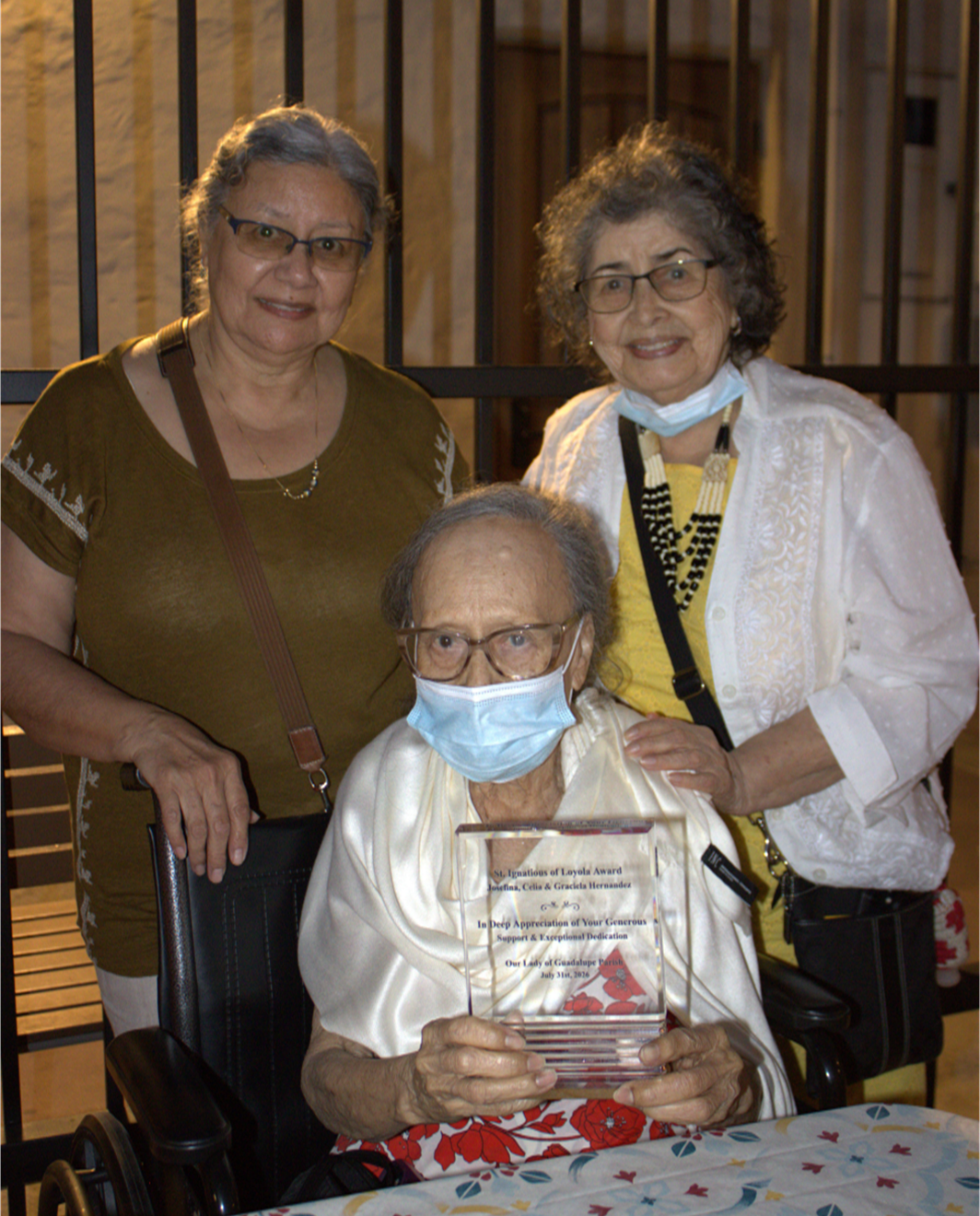
Recipients of the 2026 St. Ignatius Award: Hernandez sisters
Josefine, Celia & Graciela
Josefine, Celia & Graciela

Come, All Peoples
“My house shall be called a house of prayer for all peoples.”
This week all of the readings have as a theme the sense that God has called us all, regardless of race. When the Canaanite (non-Jewish) woman asks Jesus to heal her daughter, Jesus says, “I was sent only to the lost sheep of the house of Israel,” meaning he came to save a particular people, the Jewish people. But again and again in the gospels, we see examples of non-Jewish people who have great faith. These Jesus often highlights as examples to follow. And in the end, what seems to be most important to him is peoples’ faith, regardless of their culture, race, or religious practice.
I feel like God is wanting us to take away obstacles that keep people from coming to greater faith. I feel like God is wanting us to take away things that divide us. I think we often use our faith to divide us, as if to say, “we know the right way to God, and you do not.” While having practices, rituals, and even rules are important for any organized religion, because these give us a sense of belonging and identity, I think we humans can sometimes take them too far and use them to keep people distant. It feels like even Jesus had to be challenged out of his own “silo” mentality. And the Canaanite woman does just that!
What if we trust that God is the God of all religions, and he is the beginning and ending of every faith expression? What if instead of focusing on the things that divide us, we focus on what unites us? There is so much goodness and love in our human family, and the dignity of human beings stands as a central core of so many faiths. It is for that reason that on September 27 at 2 pm we will hold a multi-faith procession at Waterfront Park. That day is The World Day of Migrants and Refugees, a Catholic Celebration, but we are inviting people of all faiths. We hope that what binds us together will shine, which is a common believe in the sacredness of families and the sacredness of immigrants. I hope you will mark your calendar. Let us be united in love for our fellow human beings. Come, all peoples!
I feel like God is wanting us to take away obstacles that keep people from coming to greater faith. I feel like God is wanting us to take away things that divide us. I think we often use our faith to divide us, as if to say, “we know the right way to God, and you do not.” While having practices, rituals, and even rules are important for any organized religion, because these give us a sense of belonging and identity, I think we humans can sometimes take them too far and use them to keep people distant. It feels like even Jesus had to be challenged out of his own “silo” mentality. And the Canaanite woman does just that!
What if we trust that God is the God of all religions, and he is the beginning and ending of every faith expression? What if instead of focusing on the things that divide us, we focus on what unites us? There is so much goodness and love in our human family, and the dignity of human beings stands as a central core of so many faiths. It is for that reason that on September 27 at 2 pm we will hold a multi-faith procession at Waterfront Park. That day is The World Day of Migrants and Refugees, a Catholic Celebration, but we are inviting people of all faiths. We hope that what binds us together will shine, which is a common believe in the sacredness of families and the sacredness of immigrants. I hope you will mark your calendar. Let us be united in love for our fellow human beings. Come, all peoples!
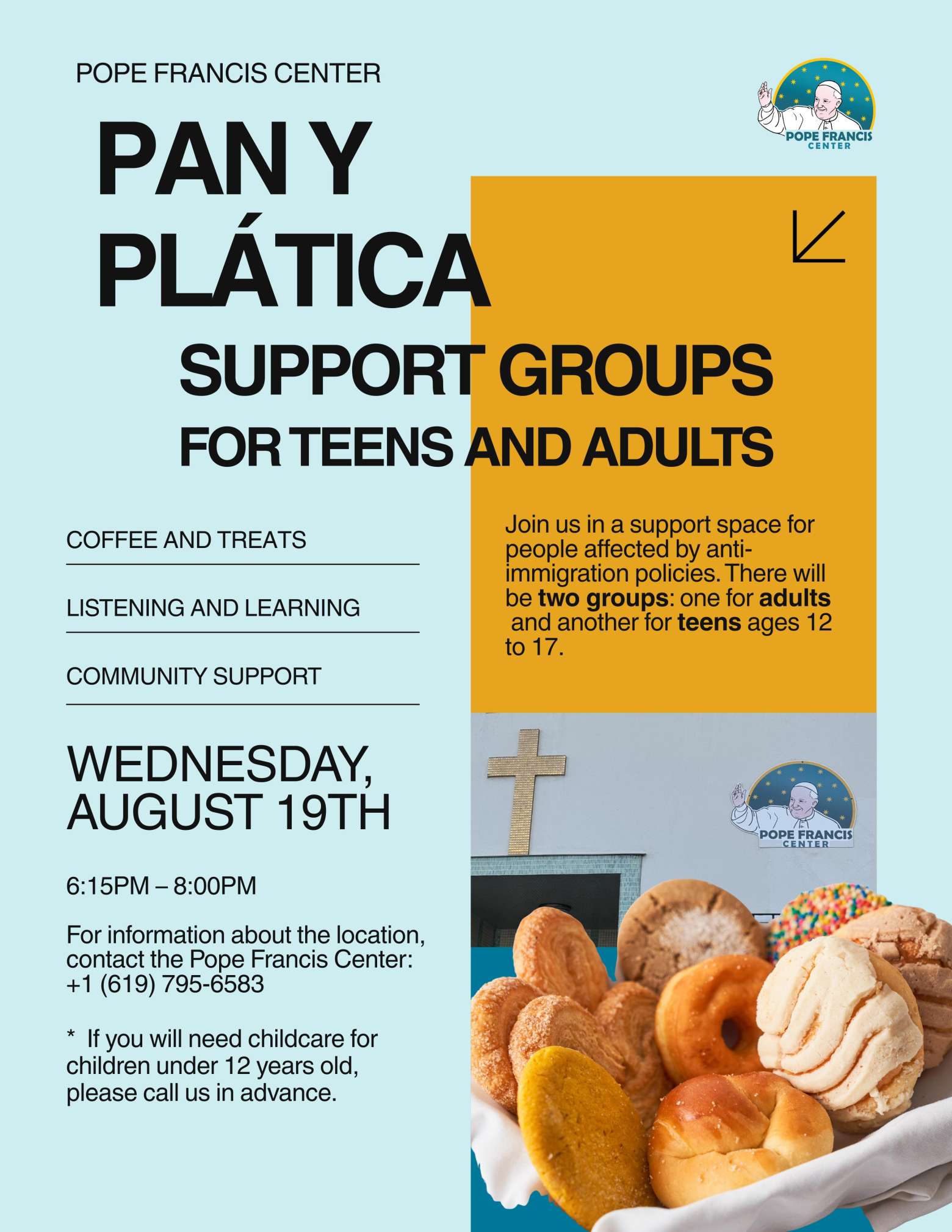
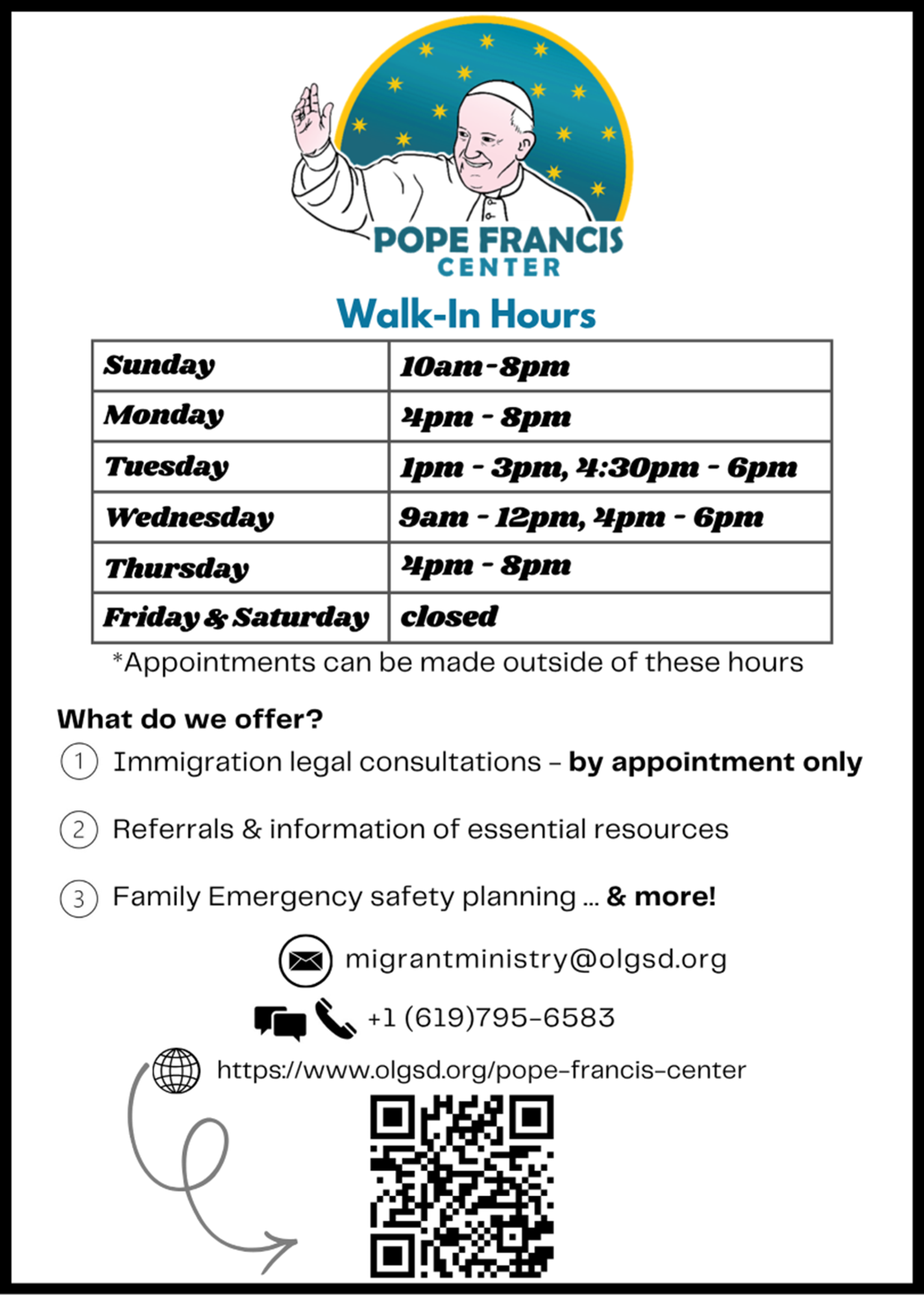
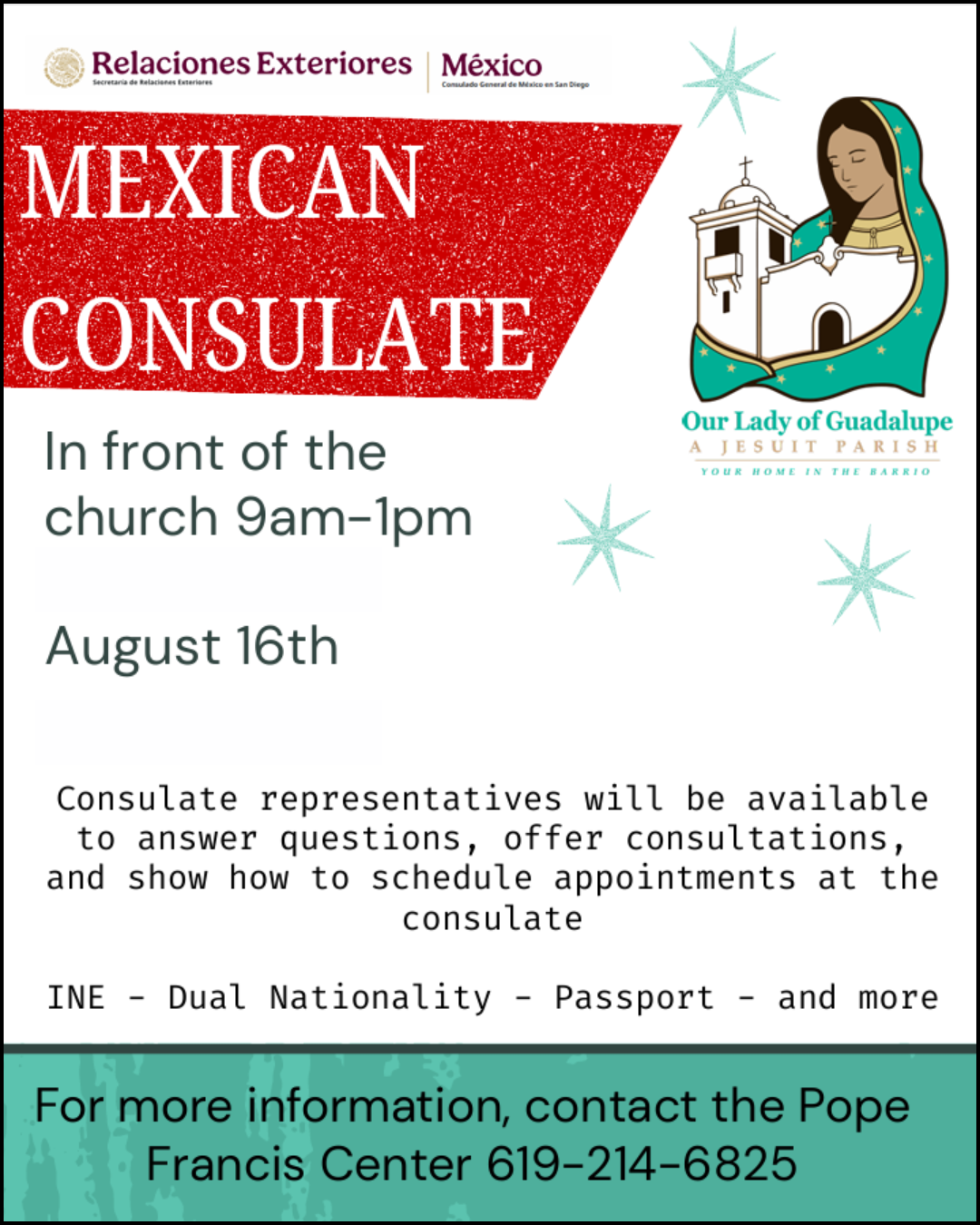
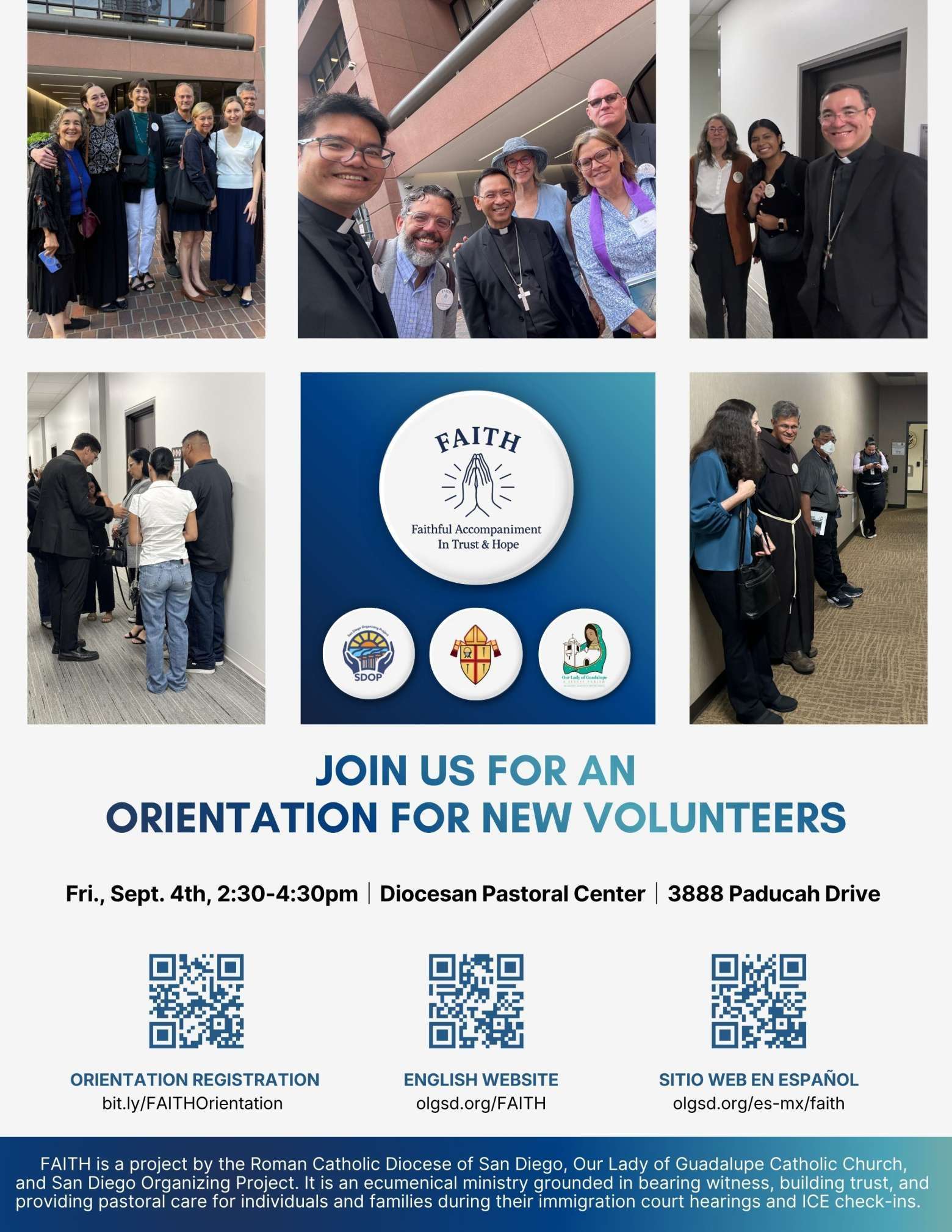


We are grateful for your contribution of time, talent, and treasure. With your support, we can continue to serve our parish community. Consider making your Sunday Offering online by visiting olgsd.org/giving.
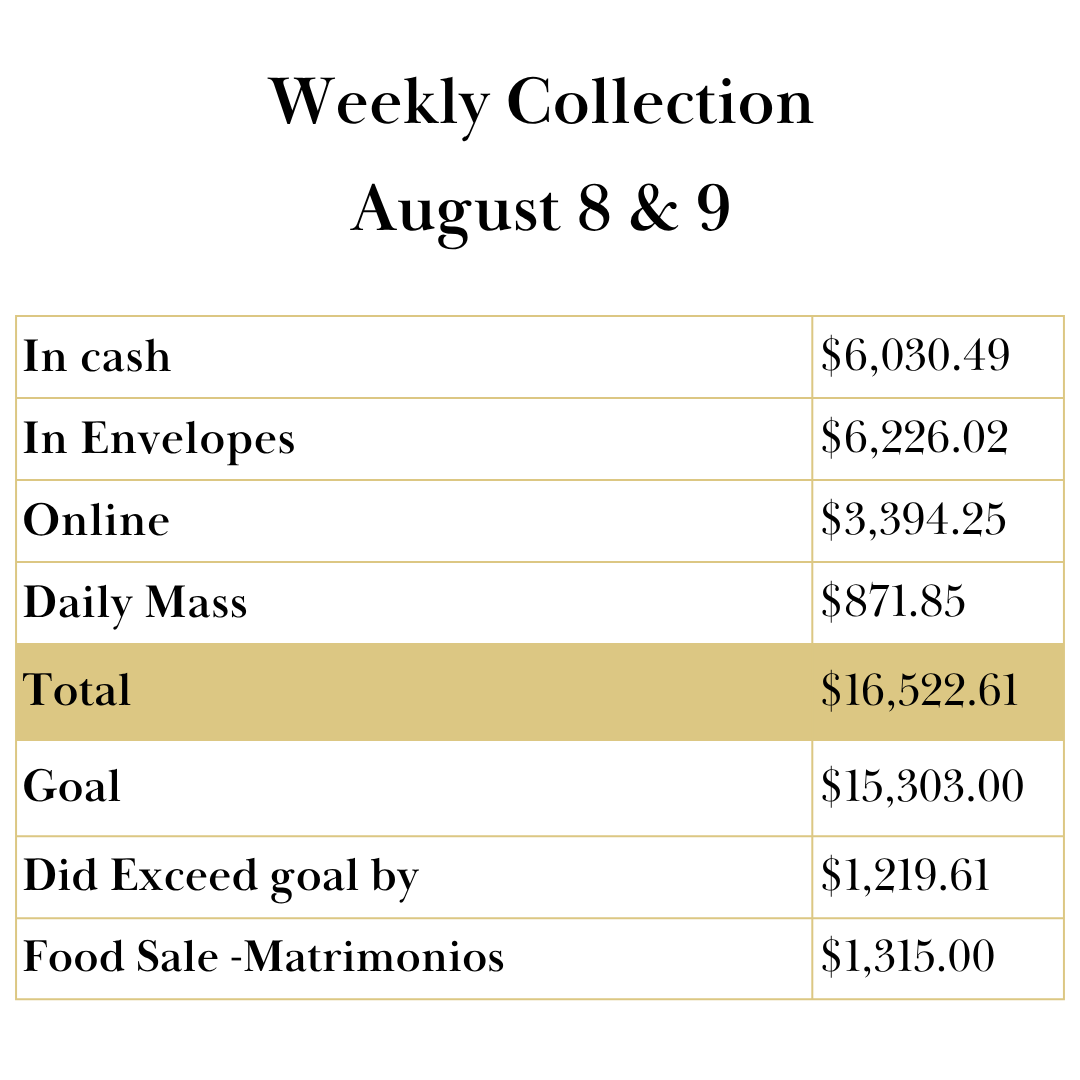
Thank you for your ongoing support!


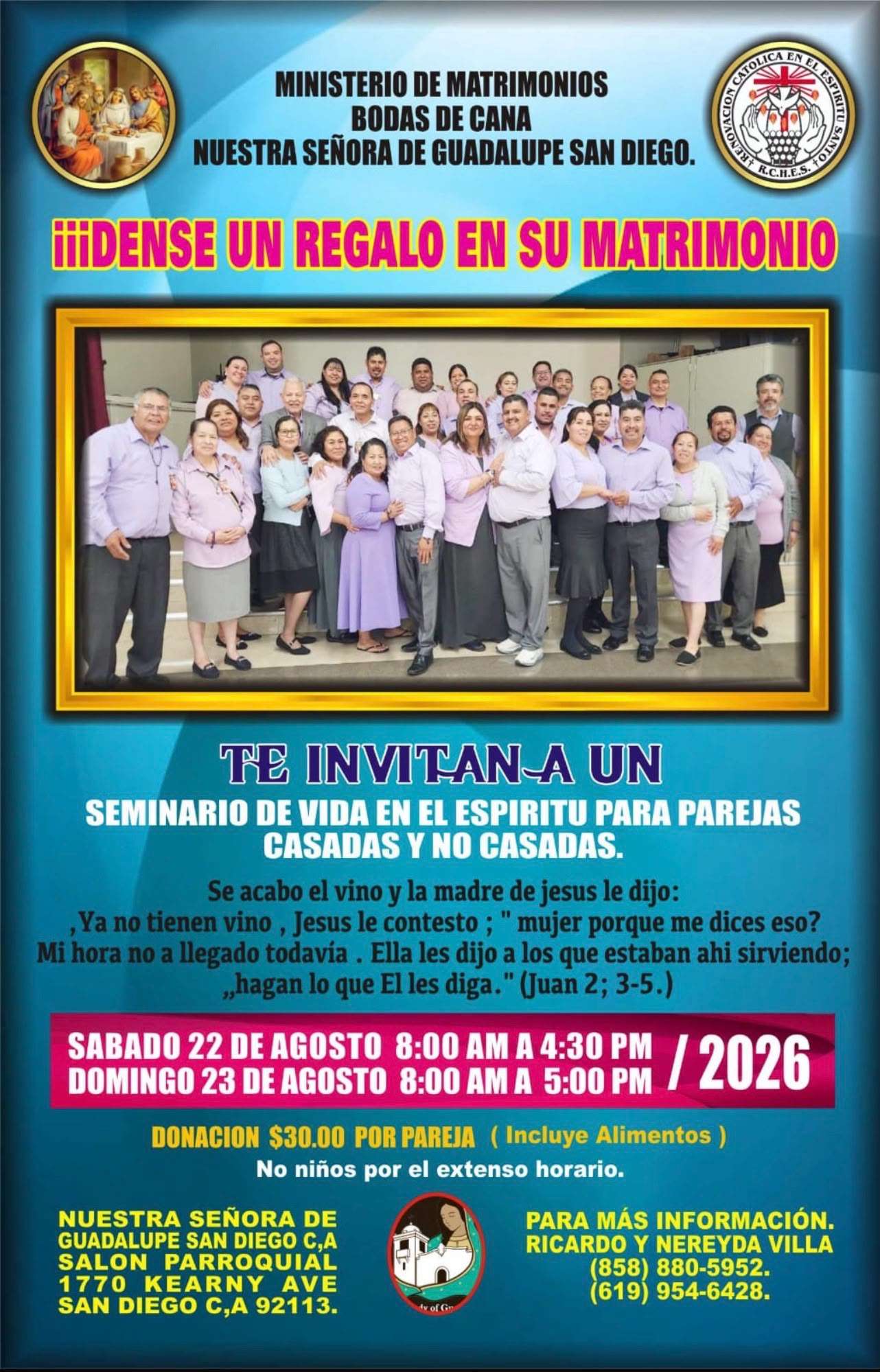
SPANISH-LANGUAGE EVENTS
Please share with those who may be interested.
⬇️
MARRIAGE RETREAT FOR COUPLES ️
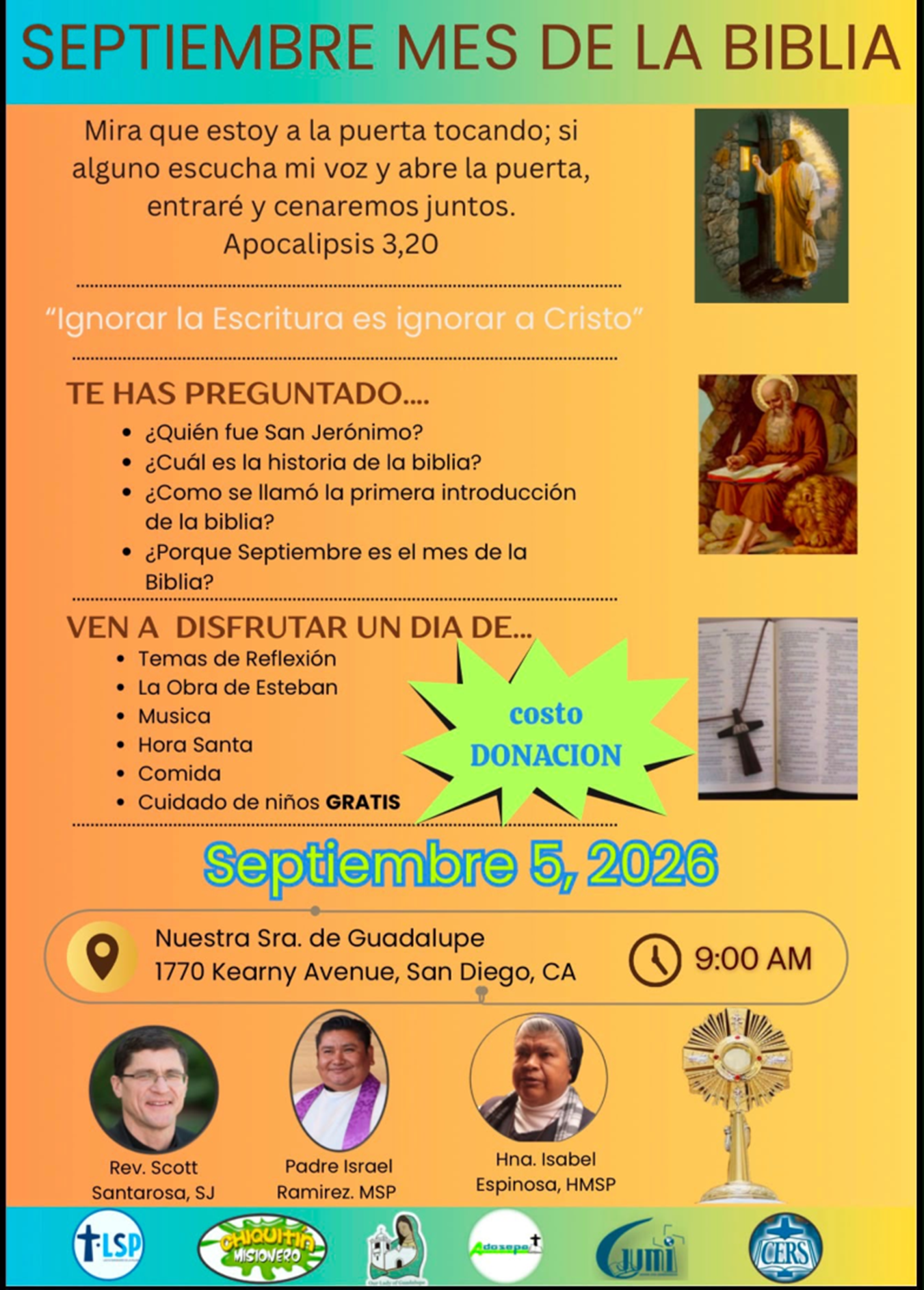
COME CELEBRATE SEPTEMBER, THE MONTH OF THE BIBLE

WORLDWIDE MARRIAGE ENCOUNTER
Jesus walked to the boat over the water and said, “Have faith. It is I. Do not be afraid.”
Learn how to let Jesus into your marriage by participating in a Worldwide Marriage Encounter Experience on September 18–20 at Mission San Luis Rey. Food and lodging are provided.
For more information, visit: wwme.org
Please share this information with family and friends who may be interested.
Jesus walked to the boat over the water and said, “Have faith. It is I. Do not be afraid.”
Learn how to let Jesus into your marriage by participating in a Worldwide Marriage Encounter Experience on September 18–20 at Mission San Luis Rey. Food and lodging are provided.
For more information, visit: wwme.org
Please share this information with family and friends who may be interested.

🕊
We are pleased to announce that the following children were baptized in our Catholic Church last Saturday, August 1, 2026.
Isabella Sophia Ruia
Braxton Richard Valdez Siems
Isaac Hernandez
Welcome to the family!

Report Sexual Misconduct Allegations
The Diocese of San Diego takes all allegations of sexual misconduct seriously and addresses them promptly, confidentially, and with integrity. To report any incident of sexual misconduct, please contact the Victim Assistance Coordinator.
Criminal abuse that is reported or suspected is reported to law enforcement in accordance with civil law.
Criminal abuse that is reported or suspected is reported to law enforcement in accordance with civil law.